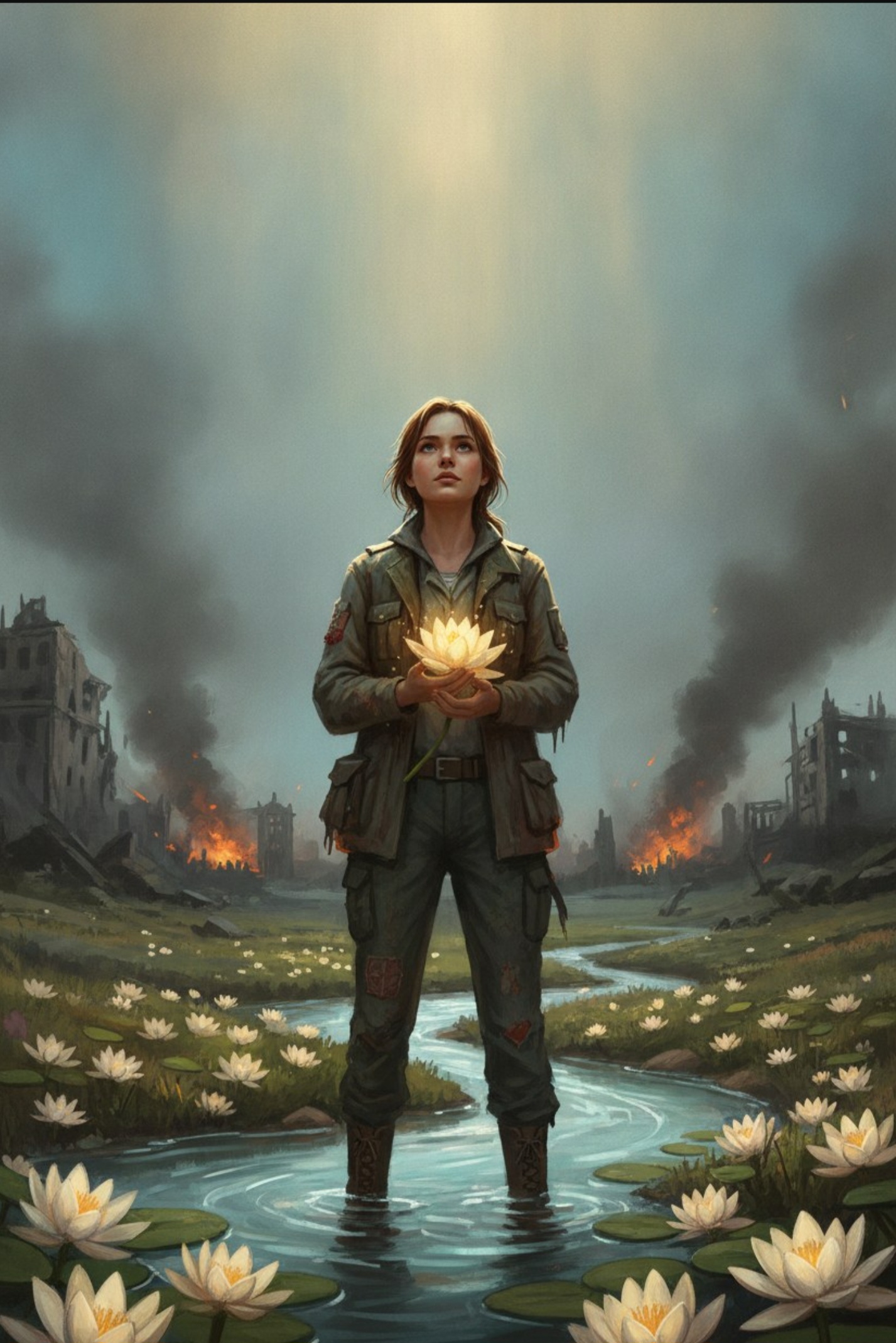
The boy turned out to be clever and affectionate. There was a special, almost bitter charm in that. He understood too much, had learned too early to read silence. Even to notice how adults’ hands tremble when they try to seem calm. To lose your parents at eleven means confronting a misfortune that does not fit into any words. At that age the world seems to become more transparent and therefore sharper. Every word rings, every glance cuts, and silence presses down like a lead slab. It is precisely now, when one’s own opinion, worldview, and system of values are forming in the soul, that support is especially needed. Not the kind that merely holds you up, but the kind that whispers: ‘You are not alone.’
For the first weeks Misha seemed to be making his way through thick fog. He was cautious. And not at all out of mistrust, but out of fear that any abrupt movement would destroy the fragile balance. He did not shut himself away, but he did not open up fully either. He found the strength to speak about what troubled him. True, he did it as if every word had to be scratched out of his chest. In his gaze that very adolescent melancholy flickered more and more often. A mixture of stubbornness and vulnerability, when you want to seem grown-up while everything inside tightens with longing.
He began calling Anna Mama on the very day she came to his hospital room to explain things. For her it was not merely pleasant. It was like recognition. He allowed himself to hope. Dina loved the boy like a real brother. She wanted to do everything possible for him so that he would feel good with them. Because she knew how hard it was to survive a loss and how difficult it was afterward to heal the wound in one’s soul. That scar remains not only in memory but in the body, aching with every draft.
Dina’s mother often had to travel to another city to process documents. To the place where Misha came from. The road stretched for hours. Every visit to an office was an ordeal. She had to retell someone else’s misfortune again and again in dry, official words. The guardianship workers were glad about this event. They knew the boy’s parents well and understood that he would have had a hard time in the boarding school. Not so much because of the living conditions as because the silence there would be completely different. Cold, indifferent, alien. And so a new chapter appeared in Misha’s life, like a cautious step forward when the ground beneath your feet still seems unsteady.
Outside the window it was autumn. A time of change, colored in the hues of loss and hope. Nature was transforming with a kind of solemn slowness. The bright colors of summer did not vanish in an instant but seemed to dissolve in the air, giving way to restrained, muted tones. Rust-brown, ash-gray, dark violet. The weather became changeable, as if it did not know what it wanted. Now it would crash down in a downpour that lashed the roofs like tears, then suddenly fall still, leaving behind a ringing, wet silence. The sky was often covered with gray, heavy clouds that hung so low it seemed you could reach out and touch that leaden weight. During the rains the sky was covered with storm clouds that poured down torrents. The world became blurred, as if someone had run a wet brush over it, erasing the clear lines. And sometimes the sun did break through the clouds, snatching individual details out of the half-darkness. A trembling leaf, a drop on the glass, a shadow on the path. This play of light and shadow seemed almost theatrical. It was as if nature itself were staging a performance about farewell and acceptance.
So a change took place in their lives as well. It was so symbolic that the coincidence made one uneasy. And what if autumn itself had taken their story and carefully woven it into its pattern?
Anna, Dina, and Misha were having dinner at the table. The room smelled of warm bread and vanilla. That smell tried to make the evening ordinary, homely. Although it could not drown out that very ringing tension hanging in the air. The candle on the table flickered, casting uneven, living shadows. It seemed that even the light was cautious today, as if afraid to frighten away the fragile balance.
Mama finally sighed with relief, but in that sigh could be heard all the weight of the path traveled. Sleepless nights, hands trembling over papers, the fear that everything would fall apart at the last moment. She looked at her children. In her thoughts checking whether they were here, real, alive, and quietly, firmly said:
“Everything is settled, my dears. The documents are done. Now we are one family. No one will be able to reproach us. No one will dare separate us.”
Misha sat clutching the edge of the tablecloth in his fingers. He was silent for a long time, listening to himself. Checking whether he had the strength to say what was burning inside him. His voice sounded quiet. There was so much tension in that silence. This is how words break through the thickness of water:
“I want to visit my parents’ graves,” he faltered, swallowed, and continued a little more quietly. “I need to go there. Not to cry… Although I probably will cry. I just need to stand there, to feel that they existed. That this is not a dream I will someday forget. The house is destroyed, I know. But there are things left there—little things that smell of the past. Maybe I can take something… even a button, even an old book, maybe photographs… Anything at all that will remind me of who I was before everything disappeared.”
He raised his eyes. In that gaze there was so much pain and pleading that Anna’s heart clenched for a moment, and Dina’s eyes stung.
“Will you support me?” Misha’s voice faltered. “I don’t want to go alone. I want you to be beside me when I stand there, in the cemetery, and realize again that they are gone, that they have truly left. Please… let’s go together?”
Anna did not hesitate for a second. She stood up, walked around the table, and knelt beside Misha so that their eyes were on the same level. Her hands came to rest on his shoulders—firmly and carefully, as if she wanted to pass on to him all her strength. All her readiness to become a wall between him and the world, if need be.
“Of course, dear. We’ll go. All together. You’re not alone, do you hear? You will never be alone again. Tomorrow I’m on duty, but that doesn’t matter. You and Dina pack the essentials for now. Think about what you’d like to take with you… and then we’ll go. And I’ll be beside you when you stand by the graves. If you want to be silent, we’ll be silent. If you want to talk, I’ll listen. And if you want to cry, cry. No one here will judge you.”
Dina, who had been sitting quietly until then, afraid to frighten away the moment, suddenly reached for Misha. She hugged him tightly, pressing her forehead into his shoulder. Her voice trembled, but it sounded firm:
“And I’m going too. I’ll hold your hand if it gets scary. And if you find something to remember them by, we’ll bring it here. It will be part of our home. Your home. Because now your home is wherever we are.”
Misha squeezed his eyes shut for a second, barely holding back tears. Then slowly, carefully, he hugged Dina back. A shadow of a smile flickered across his face. There was so much gratitude in it.
“Thank you,” he whispered, and the word sounded like a vow. “Thank you for being here.”
And so it was decided. Outside the window, the rain drummed against the glass. It counted off the seconds of a new life, and the room became a little brighter. Even the darkness retreated a step, acknowledging that here, among these three, grief could not rule unchallenged.